Maintaining your property
Preventing Subsidence: How to Stop it in its Tracks
May 2026 | By Michael Chichester

May 2026 | By Michael Chichester
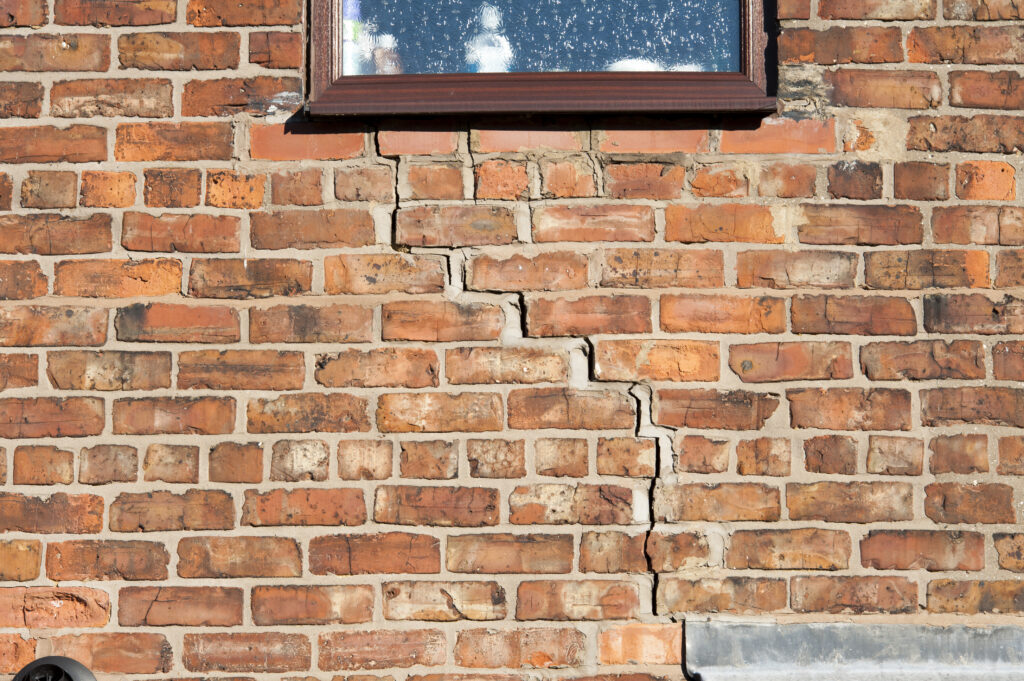
Subsidence is a serious issue for both homeowners and buyers. It can affect the structural integrity of your property and cause a major drop in value if left unchecked.
Understanding what subsidence is, its causes, how to spot it early, and how to prevent it can save you thousands of pounds in repair costs and preserve the long-term stability of your home.
If you’re worried about subsidence, contact a chartered surveyor or structural engineer to assess your property and conduct a thorough investigation.
Subsidence occurs when the ground beneath a property begins to sink or collapse, pulling the foundations with it. The movement causes visible cracks in the walls, uneven floors and doors and windows that stick and even worse.
You can break subsidence down into two main categories:
Historic subsidence is viewed as less of an issue, even though it can still impact the value of your home. On the other hand, active subsidence is an ongoing problem that is likely to have serious financial implications if you decide to sell or remortgage.
Several factors can cause subsidence. It usually happens when the ground underneath loses moisture and begins to shrink after long spells of dry or wet weather. In the worst cases, homes that suffer from subsidence may need to be underpinned (improve foundations) at significant cost to prevent damage spreading to other parts of the property.
Activities like mining and groundwork can also cause buildings to subside. Here are some examples of what causes subsidence:
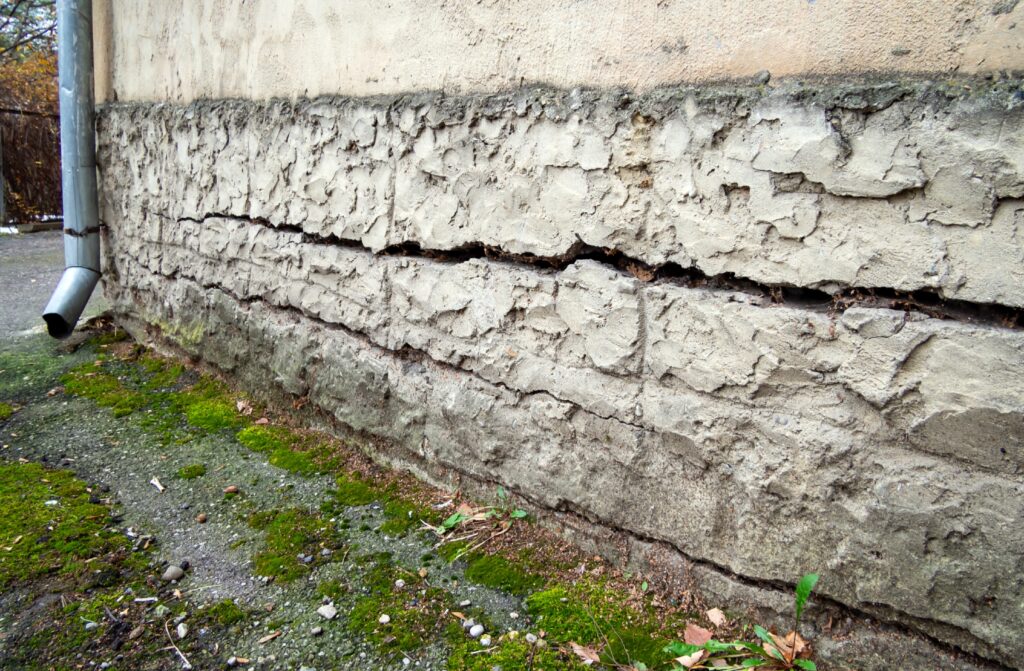
Early detection is key to preventing serious damage to your property from subsidence. Here are some of the telltale signs of subsidence to look out for.
Doors and windows that stick or don’t open and close properly could be caused by distortion of the walls that occurs when the foundations move or sink.
Sinking or sloping floors can be an indication of subsidence. Gaps between the floor and skirting board can also be a sign, more typically inadequate consolidation of the fill material below the floor.
Subsidence can cause wallpaper to ripple and crinkle at the wall and ceiling joint. Cracks can also occur where an extension joins your main property.
Not all cracks in walls and ceilings are caused by subsidence. They are often the result of the main building shrinking and expanding due to seasonal and temperature changes.
New-builds or replastering projects may develop cracks as the plaster dries out or the structure settles. Cracking can appear at the junction of an extension or conservatory to the main building, where not properly bonded to the main building.
Subsidence can be a major worry for any homeowner. It not only affects the structural integrity of your property but can also wipe thousands off its market value and require costly repairs.
If your home is at risk of subsidence, prevention is always better – and cheaper – than cure. The following steps will help you reduce the chances of your home sinking and subsiding.
Keep an eye on any trees and shrubs near your property, as the roots can spread, drawing moisture from the soil causing shrinkage and even damage the drains and foundations. Avoid planting large trees like oak, elm, horse chestnut and poplar too close to your home. Also, regular pruning of existing trees helps prevent the soil from drying out.
Repair all leaks promptly to prevent soil movement and erosion that can lead to subsidence.
Upgrade the drainage system and downpipes to ensure rainwater is directed away from the building’s foundations.
Keep an eye on small cracks in walls and floors and note any changes over time. These can be an early sign of subsidence.
Chartered surveyors and structural engineers know exactly what to look for when it comes to subsidence. Booking a property survey can help you spot the warning signs and suggest preventative action before the problem becomes more serious.
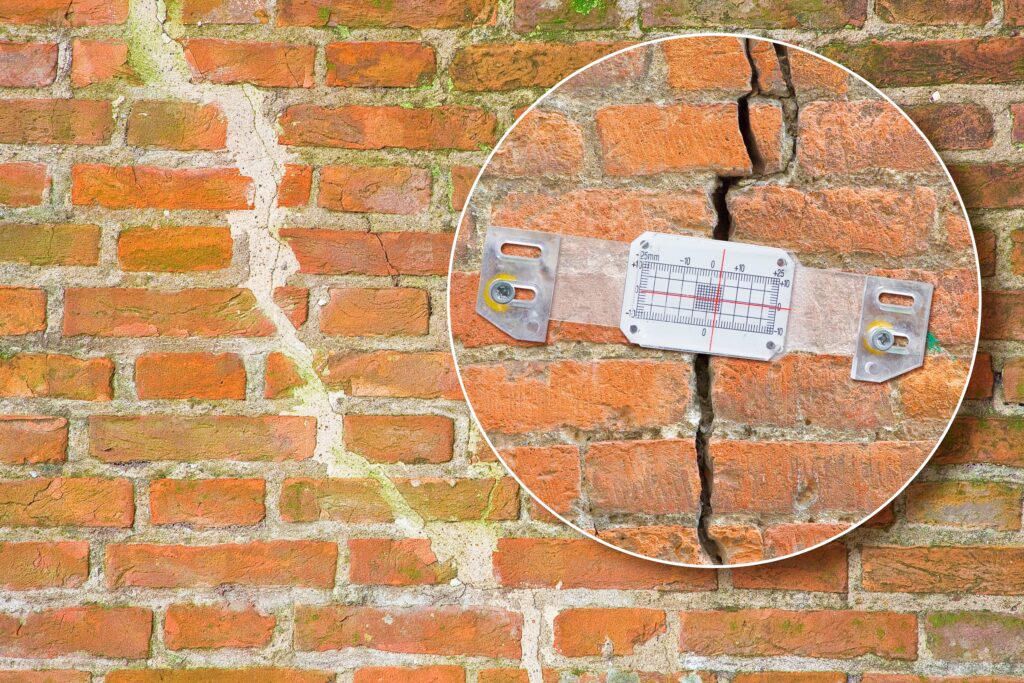
Understanding the difference between subsidence and settlement is vital. That’s because most home insurance providers cover subsidence, landslip and heave, but not settlement.
The Financial Ombudsman Service defines subsidence as “When the ground beneath a building sinks, pulling the foundations with it.”
This differs from the definition of settlement, which is “Downward movement caused by the weight of the building compressing the soil within 10 years of construction.” You might see settlement also referred to as ‘consolidation’ or ‘compaction.’
Subsidence can significantly impact a property’s value, depending on the nature and severity of the damage to the building’s foundations.
Many sources suggest that subsidence can knock up to 20% off the value of your property and put off prospective buyers.
Meanwhile, the Association of British Insurers estimates that the average cost to repair subsidence is £17,264, though this figure can rise significantly if major underpinning work is required. Thankfully, most homes affected by subsidence do not need underpinning. However, buyers are always wary of homes with historical subsidence, so professional repairs and certifications, such as a structural engineer’s report, are vital when it comes to selling.
e.surv has been a leading presence in the UK residential property market for over 30 years. Our professional surveys are provided by members of the Royal Institution of Chartered Surveyors (RICS) and help homebuyers identify issues like subsidence before they commit to purchasing. Our findings can help you negotiate a better sale price, factor in the cost of repairs or pull out of the deal.