Moving home
When Is It Most Expensive to Buy a Home?
November 2025 | By Rob Owens


Is there a “magic month” to buy a home in the UK? Many buyers assume that timing the market -waiting for January bargains or summer deals – can save thousands. It’s an appealing idea, but the reality is far less dramatic.
According to e.surv’s research team: “There’s no ‘best month’ to buy in terms of price. Seasonality typically affects when people transact, not how much they pay.”
Spring and summer are traditionally the busiest periods for property transactions. Families often plan moves around school holidays, and better weather makes viewings and removals easier. Estate agents typically list more homes in early spring, especially February and March, creating momentum that carries into summer. Completions usually follow 8–12 weeks after an offer is agreed, so the surge in listings translates into higher completions later in the year.
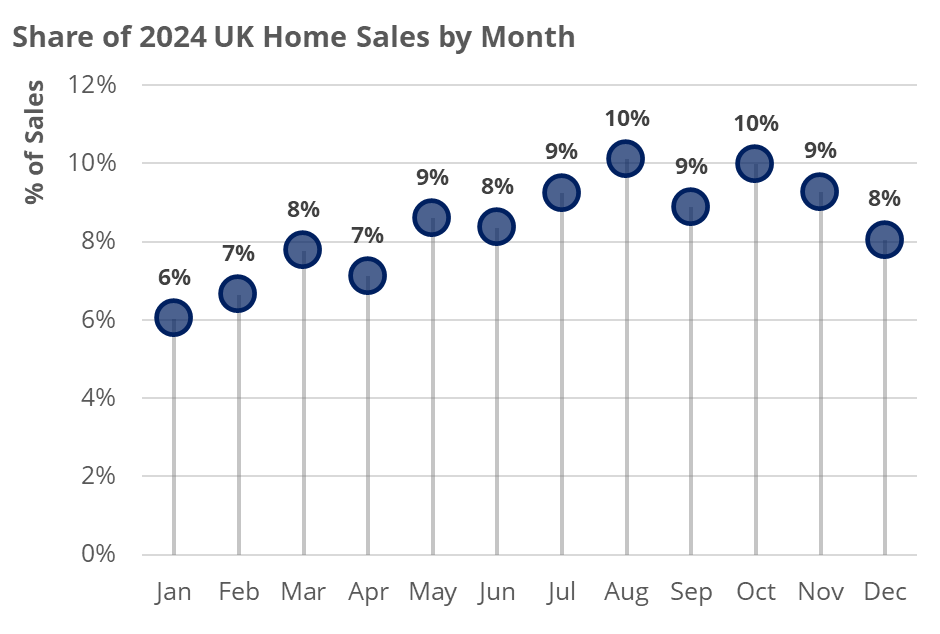
However, while transaction volumes rise in warmer months, price levels across the year show minimal variation. Long-run analysis of HM Land Registry data shows that monthly prices differ by less than 2% from the annual average, even over a decade. In other words, buying in July versus November won’t materially change what you pay. The idea of seasonal bargains is mostly a myth, driven by busier markets and media headlines rather than real price changes.
If seasonality isn’t the key factor, what is? Three main forces shape today’s market:
• Supply and Demand: Increased supply is the headline story. More homes are available, but buyer numbers have softened due to affordability pressures or wavering sentiment. This imbalance gives purchasers more leverage.
• Affordability: Mortgage rates, household income, and cost-of-living trends shape what buyers can truly afford. Policy interventions—like stamp duty holidays—often influence market timing far more than seasonality. For instance, the end of the SDLT holiday earlier this year sparked a surge in purchases driven by tax incentives, not seasonal factors.
• Buyer Leverage: With fewer buyers competing, sellers are more open to offers. This creates opportunities to secure better value — regardless of whether it’s January or July.
Price isn’t seasonal, but timing still matters – just not in the way most people think. It’s less about the calendar and more about being prepared and strategic:
• Get mortgage-ready: Securing an agreement in principle helps you act quickly when the right property appears. Speed matters more than waiting for a “cheap month.”
• Watch supply trends: Spring often brings more choice, but leverage matters year-round.
• Act on opportunity: If a property fits your needs and budget, don’t delay for seasonal myths.
• Use supply to your advantage: Homes that linger on the market often signal price flexibility.
• Stay informed: Mortgage rates and affordability trends influence value far more than the month you buy.
Right now, the UK market offers something rare: choice. With more homes available for sale right now, buyers can compare, negotiate, and move at their own pace – a contrast to the pandemic bidding wars.
Seasonal patterns shape activity, not price. In 2024, HMLR data shows that 30% of home sales were completed between August and October, a swing of almost 40% in activity compared to the first three months of the year. Yet, HM Land Registry figures reveal that monthly average prices barely moved: typically within ±2% of the annual average.
So while the market feels busier in spring and summer, buying in July versus November won’t materially change what you pay. The perception of seasonal bargains is a myth—driven by transaction spikes and headlines, not real price shifts.
The smartest strategy? Focus on affordability, negotiation, and readiness, not on chasing a “cheap month” that rarely exists.