Moving home
How Do Property Auctions Work?
September 2025

September 2025

Auctions can be a great way to buy a property if you want to avoid lengthy delays and secure a bargain.
If you’re considering buying your next home at a property auction, discover exactly how it works, the costs involved, the pros and cons, and what you need to do.
Property auctions used to be favoured by cash buyers and investors. Nowadays, all types of people purchase properties at auction, including those using a mortgage.
Once an auction house or estate agent has listed the property, prospective buyers can arrange viewings and even pay for a home survey to identify structural problems and repairs that may affect its value. That way, you’ll be able to budget more accurately when auction day arrives and the bidding process begins, whether online or in person.
Either way, the seller will set a reserve price, which is the lowest figure they would accept. The bidder who makes the highest bid over the reserve price gets the property, and the auctioneer will bring down the hammer to signify the end of the process. If that’s you, you’ll need to pay a deposit or reservation fee on the day of the auction.
There are two main types of property auction – modern auctions and traditional auctions. Each has its own specific set of rules. Here’s what you need to know:
Also known as conditional auctions, modern auctions run online, usually for up to 30 days. Like bidding on eBay, this gives buyers greater flexibility and more time.
If your bid wins, you’ll pay a reservation fee of around 5% of the purchase price to cover auctioneer and estate agent costs. Then:
Traditional auctions, or unconditional auctions, have shorter timeframes than modern auctions, which can make them less flexible.
They generally take place at auction houses with prospective buyers in attendance and possibly others waiting online. All parties are invited to place bids openly in front of one another. If your bid wins:
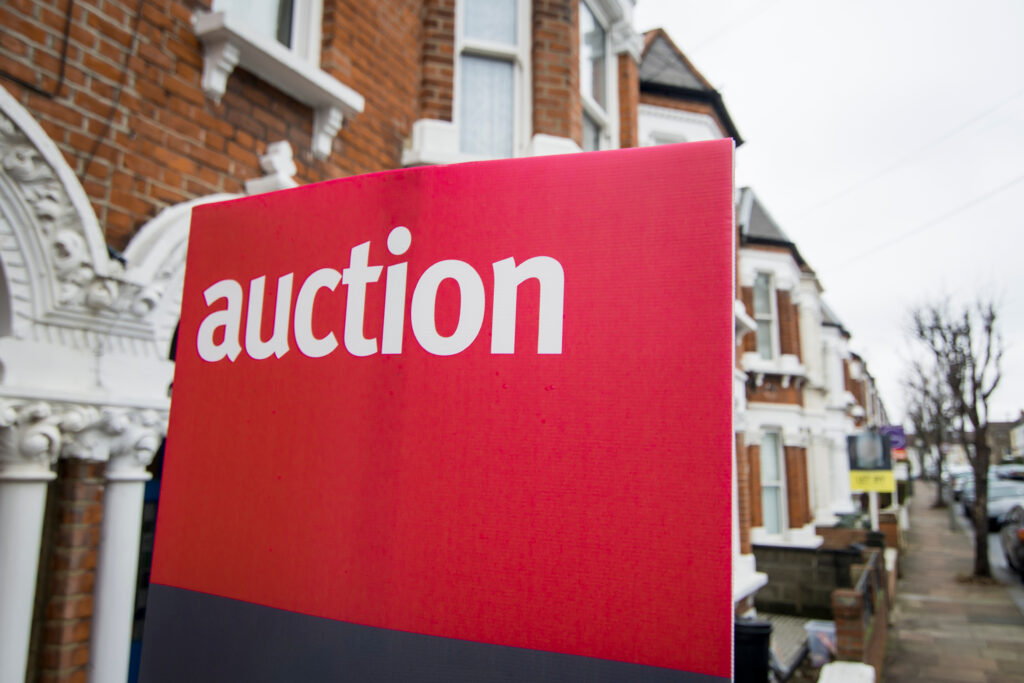
There are many ways to prepare for a property auction that could help secure your next home.
You’ll get around one month between a property being listed for sale and the start of the auction itself, whether online or on the auction day. This gives you time to research the property, understand its value and get familiar with how property auctions work.
Here are some tips to help you get started:
The local property auction house will alert you to any upcoming auctions and add you to their mailing list. You’ll receive the latest auction catalogues containing all the available properties in the area.
The auction house will arrange a viewing so you can conduct a thorough inspection of the property and the surrounding area.
You could invite a property expert like a surveyor or builder along to assess the building’s condition, identify problems and provide a rough estimate of repair costs. You can book multiple viewings if you like, and the auctioneer can also help with any questions you may have.
You can get a legal pack from the auction house, usually at no cost. It contains important information about the property, such as title deeds, searches, fixtures and fittings.
Instruct a solicitor to read the legal documents and paperwork, check the small print and ensure everything is legitimate and above board. They’ll look for loopholes and hidden covenants that could push up your costs considerably. Not only that, but the solicitor will also be ready and prepared to help you with the next purchasing steps.
The next step before buying at a traditional auction is to get a property survey. A qualified surveyor will give their professional opinion of the property’s condition, highlight defects and suggest any repair or maintenance work. A report can also be provided containing information about likely energy costs, carbon emissions and the local area, such as schools and demographics.
There are three types of property surveys, ranging from the most basic RICS Level 1 to the most comprehensive RICS Level 3. The most common survey is a RICS Level 2, which is suitable for most properties.
As property surveys are backed by the Royal Institution of Chartered Surveyors professional body, you can go ahead and bid in confidence. It will be too late to back out if you uncover any hidden defects after winning the auction.
With modern property auctions, timeframes are longer, and you can arrange a survey at a later date.
If you’re using a mortgage to buy a property at auction, you’ll require an Agreement in Principle (AIP) from your bank or building society. This will indicate how much they’re willing to lend you for a mortgage, should your bid be successful.
An AIP is not a formal mortgage offer, but it does highlight your borrowing potential. When obtaining an AIP, you’ll need to explain that the loan will be used to purchase a property at an auction.
The guide price is exactly that – a guide. Properties sold at auction usually have a low guide price to increase interest and attract bidders. But they often sell for significantly more on auction day.
If you’re unsure how property auctions work, fix a maximum price you’re prepared to pay and stick to it during the auction process. If there’s lots of interest in the property, the seller may increase the guide price before the auction starts.
Auction day has arrived – what’s next? It’s easy to let your heart rule your head. To avoid going over your budget and bidding too high on a property, follow these simple tips:

Great news! Your bid was successful, and you’re the proud new owner of the property – almost.
You still need to pay your deposit or reservation fee and sort out the legal paperwork. Here’s what you should do:
If you bought a property at a modern online auction, you’ll need to get a survey.
While a property survey is not a legal requirement in the UK when buying at auction, it is highly recommended. It will help you spot any problems and defects, and you could still pull out if you purchased through a modern auction.
Alternatively, traditional buyers often pay for a survey on the property they’re bidding for to help set a strict budget before auction day arrives.
Your mortgage lender will carry out a home valuation to check that the property is worth what you’re paying, is in a habitable condition and meets their lending requirements.
If the lender is satisfied with the property, they will provide you with a mortgage offer within a matter of days.
You become responsible for the property the moment you exchange contracts. That means you’ll be liable for any costs and repairs that may occur.
Getting building insurance means you can mitigate the risk of damage, fire or flooding. You’ll receive peace of mind that the building’s structure is protected should anything bad happen.
There are benefits and drawbacks to buying a home through an auction. Here, we highlight the advantages and potential risks:
| Pros | Cons |
| Secure a bargain: Auctions offer opportunities to buy a home renovation project or low-priced property, saving you money. Quick sale: You can buy a property, exchange contracts, and complete a sale within a month. Full transparency: You have full visibility of all offers to avoid being gazumped by a higher bidder. Level competition: You don’t have to worry about other homebuyers making higher bids without your knowledge. Mortgage-friendly: Most banks and building societies offer loans for properties bought at auction. | Tied in: It’s difficult to pull out of an auction purchase if you change your mind. Getting out could cost you a significant amount of money. Uncertainty: There’s no way of telling if your bid will be the highest until bidding ends. Upfront costs: You’ll need to pay a significant amount of the money on auction day and settle the remaining balance soon after. Intense: Taking part in a property auction can be an emotional experience, especially if you lose your dream home to a rival bidder. |
Ultimately, there’s more risk attached to buying a property at auction than going through an estate agent.
There’s no guarantee of securing a sale or that you’ll find a home that fits your budget. Not only that, but it will be expensive if you change your mind and pull out.
However, there are also several benefits to buying a property at auction. There are plenty of bargains to be found, and it’s quicker than going through an estate agent.
Doing your homework and research, and learning the rules and processes of property auctions, could help you find your dream home and save money.
Now you know how property auctions work, you may be looking for a professional RICS survey before you bid on the home of your dreams. Contact e.surv today to see how we can help.